Showing posts with label Ghost Stories. Show all posts

Tuesday, January 5, 2016

The cross roads … steeped in blood


Imagine …

It is a day of execution at a cross roads in medieval Dorset. The gibbet dominates the scene where the four roads meet which connect the local villages. Life is cheap, and for the poor, short. There is a large crowd gathering in a party atmosphere with brightly coloured stalls selling beer, pies and gruesome relics from other executions. These are always fake but in a time of religious fervour the gullible public will buy anything which has even the faintest hint of a promised salvation which such remains were deemed to possess. This even affected the rich and educated.


Red Post sign, A31, Dorset


They are coming from all four directions; sightsee-ers from the various villages who have been discussing this day for several weeks. There is a palpable feeling of excitement. And finally the star of the show is led to the gallows; sometimes even dragged there on a wicker sled. He, or she as in those days many witches were hanged, is then prodded up the ladder, the halter is attached to the sound of prayers being offered by the local priest, then the victim is swung off into space to “dance” until death relieves the suffering. This is accompanied by much shouting and hooting from the onlookers, until a collective indrawing of breath marks the final moment. Then the crowd, after loitering for an hour or so to watch the final gyrations of the body, departs. Because now a new fear replaces the spectacle. It is a well-known fact that on crossroads such as these, unhappy souls who have committed suicide are buried. There is nothing to mark their passing, none to lament their shortened lives but the rumours persist of these spirits returning to haunt those who linger. It was well-known that crossroads such as these were chosen to bury the dead so that the soul of the departed would be too confused to know which road to take to seek retribution from those who had persecuted them in life. To the Church such an action was an ultimate sin so no help or comfort would come from that source.

And then we come to the interesting part of the story. To remind people of where they are, and to encourage strangers to hurry past with averted eyes to avoid seeing evil, the road signs on these crossroads were painted red.

A likely story I hear you scoffing.

But such a red sign still exists on the Bere Regis to Wimborne Minster road, the A31. So for those who are sensitive to such things if you go there on a quiet morning you might just hear a whisper of the crowd, or a harsh grating of the rope against the crossbar of the gibbet as the weight suddenly takes hold and the struggle begins. Or it might be just the soughing of the wind in the trees. But anyway, this is not for the faint hearted. Most of us who have to go that way, hurry past with a prayer for the tragedies of the past.


Follow P J Cadavori:


Thursday, October 23, 2014

A ghostly halloween moon ...


It’s the time of year when thoughts turn to muffled walks along the beach, when winds and gales storm in from the vast reaches of the oceans to pluck the leaves from trees which are themselves battening down for the harshness of winter. Walks down country lanes and over fields see the desperation of small animals trying to find shelter from the desolation which is to come. But yet this is no armageddon. It is just the turn of the seasons which give such richness to our lives. It was Keats, about two hundred years ago, who penned the immortal phrase “Season of mists and mellow fruitfulness” which so brilliantly summed up the gentler side of autumn.


But there is a more mysterious side ... felt best at night. About one hundred years ago  the poet Alfred Noyes wrote:

                             “The wind was a torrent of darkness among the gusty trees,
                               The moon was a ghostly galleon tossed upon cloudy seas”

How evocative. And it is true that the moon seems to come into its own when summer has departed and cold windy nights hold sway with threats of darkness, storms and unexplained events. And this mysticism is compounded by the way the moon changes its shape during its cycle. Imagine how primeval man must have lived in such awe of this fearful influence which often hangs, huge and remote, and then seems to shape-change in a baleful silent mystery. Watching and waiting, while the affairs of men continue in fear.

So imagine my delight when driving through a small mediaeval village in Somerset called Stoke sub Hamdon. There are rows of delightful old terraced cottages, many of which have boston ivy clawing a purchase on the honey coloured sandstone, and in the middle of which is a pub called “The Half Moon”. Images of the Occult immediately rose to mind. Finding a parking space I could then look more closely and get a feeling for the building. This appears to be an old coaching inn which according to the most hospitable landlady Anne, then became two cottages before being turned into a pub.


The Half Moon in Stoke sub Hamdon, Somerset

The sign outside is a slight anomaly in that it is actually a waxing crescent moon, with the horns pointing to the left. A half moon by definition has no horns. But who cares? When the moon is waxing, or getting larger, it is a wonderful time for magic, curing of illnesses and generally is a “good” influence. So this pub is definitely worth a visit without any danger!

Going through the heavy wooden coaching doors you are instantly taken back to a more simple age where wood and natural materials give a secure ageless feeling of warmth ... a sympathetic background from the steel and glass of the modern era. And, for those sensitive to such things, it is an obvious playground for the spirit world. So, settling down with a few drinks, Anne told us some entertaining stories about her ghostly experiences since taking over the Half Moon. These included:

  • Unexplained footsteps upstairs when there was nobody there
  • Midnight voices, some raised in argument
  • The front door mysteriously becoming unlatched
  • Barrels being moved in the cellar in the early hours of the morning

But the piece-de-resistance is the Coachman. He has been seen standing in the main bar area dressed in nineteenth century boots, stove pipe hat and hardy coaching gear as protection against the vagaries of the weather which he must face through all seasons. But he quickly vanishes when observed. It is perhaps he who has followed Anne at midnight, whistling in an eerie fashion?

But that’s not all. There is a Roman soldier who has taken up residence behind the bar; perhaps he was wounded in the many battles which took place around that part of England. Maiden Castle is just thirty miles away, and Roman soldiers have been seen marching in columns down from Ham Hill which dominates the skyline above the village. Perhaps the soldier died on the premises and has been unable to “move on”?

And so the stories go on. Anne is a wonderful entertaining host who revels in the Half Moon’s history. It is definitely worth a visit....maybe on a clear night when the halloween moon is at its brightest?


Buy P J Cadavori's Catacombs of the Damned 


P J Cadavori's supernatural horror novel, Catacombs of the Damnedis available to buy at Winstone’s of Sherborne, and online at Waterstones or Amazon, in paperback and e-book formats. Click on the book covers below to view Catacombs of the Damned at Amazon.


Kindle                        Paperback 


Follow P J Cadavori:


Monday, October 13, 2014

Is this the most ghostly valley in Britain?


Hermitage Castle, Scotland

In the border lands between Scotland and England there is a most sinister building which has had literally a continuous history of horror, warfare and bloodshed, intrigue and foul tortures, witchcraft, imprisonment to death, boiling in oil to name just a few. It all took place in the “bloodiest valley” in Britain where there is a sinister, evilly atmospheric building called Hermitage Castle.

As is usually the case, we go back to the turbulent 13/14th centuries when the first, and most notable of the horrors started. This involved the owner, a notorious villain called William de Soulis who was an unashamed practitioner of witchcraft and such was his power that he became almost unstoppable. Amongst his many excesses he was rumoured to spirit away children for use in his rituals, and even conspired to kill that iconic Scots King, Robert the Bruce. Eventually however, his actions became too much even for those times and he was captured by his tenants who, legend has it, boiled him in lead within an ancient stone circle; the belief being that this would stop his return from the afterlife.

Then, with bewildering speed the castle changed hands many times, sometimes supporting the English, sometimes the Scots. But whoever the owner was the castle seemed to inspire unbridled brutality and unexplained events:

  • The mysterious disappearance of the original group of Holy men who lived there; but the name of Hermitage survived
  • A local sheriff, amongst many others, was imprisoned there and starved to death
  • Revenge killings as a succession of owners defected to the opposite side
  • Disappearance of local children during de Soulis’ ownership
  • A giant who terrorised the area but was eventually caught and drowned ... one of the more fantastical legends
  • Survival of de Soulis’ “familiars” who continue to haunt the valley
  • Countless examples of treason and intrigue, jailings and forfeiture of land

Inside Hermitage Castle

As the list of horrors goes on and on it is no surprise that the castle pervades a sinister atmosphere of misery, fear and ghostly sightings. Specifically, the awful cries of children and prisoners who were incarcerated in the dungeons can still be heard, or it might be the wind keening around the stark battlements. Who really knows? And Mary, Queen of Scots is rumoured to be one of the figures who can be seen moving about the upper rooms on dark and dreadful nights. Also, near the Giant’s Drowning Pool, some visitors have felt a presence which appears to try to push them into the water. But, most sinister of all, de Soulis and his cronies in crime are reputed to walk within the castle, treading passageways which no longer exist .. they seem to be floating in the air.

All in all, Hermitage Castle and the surrounding countryside is a “must visit” place; but go with friends as you never know what you might meet.


Buy P J Cadavori's Catacombs of the Damned 


P J Cadavori's supernatural horror novel, Catacombs of the Damnedis available to buy at Winstone’s of Sherborne, and online at Waterstones or Amazon, in paperback and e-book formats. Click on the book covers below to view Catacombs of the Damned at Amazon.


Kindle                        Paperback 


Follow P J Cadavori:

Tuesday, August 12, 2014

In 1916 £35 could buy you a ghost ...


Thoor Ballylee Castle, County Galway, Ireland

Recently I was thumbing through an old book of Yeats’ poetry, as one does on rainy, storm sodden nights, his particular brand of mysticism being well suited to such conditions. While trying to make sense of “The Tower” my mind wandered away to where he lived in Ireland before his death in 1939.

He fell in love with a bleak but beautifully atmospheric castle in Galway which had gradually fallen into ruins during the many centuries since its construction in the lawless times of the thirteenth century. Yeats bought it in 1916 for £35 and thus started a life-long enthusiasm which saw it being rebuilt into what is now a fairly stark tower within which is a narrow winding staircase. This is where our story begins.


The ghost captured on camera by David Blinkthorne in 1989

Yeats believed strongly in ghosts and the afterlife and swore that he shared the tower with a Norman soldier, perhaps one of the original occupants. Further, this was supported by a more recent curator of the Yeats museum who frequently witnessed a strange shadowy figure gliding up and down the stairs, and whose dog showed extreme nervousness when night was falling. And, most surprising of all, in 1989 a Yeats enthusiast added to the ghostly stories. He had arrived at the tower late in the afternoon when the doors were being shut for the night. The curator, being a kindly soul, allowed him in and left him to take his photographs. But, when these were later developed (in the pre-digital age this took about 2 weeks), there was a strange shadowy figure of a young boy by the window. This was most surprising because the photographer was alone. After much examination, it was generally believed that this ghost was Yeats’ son.


Haunted Thoor Ballylee Castle

The castle is called Thoor Ballylee and is certainly worth a visit ... preferably on a wind tossed winter evening when it is easy to transport yourself back to a more primitive, sensory era. And you will get the added stimulation of revelling in the environment which so inspired one of the giants of the twentieth century.


You can also read this article, and many others, at the Western Gazette website. Click here to follow me and be the first to know when I publish my next short story, article or book review.

Buy P J Cadavori's Catacombs of the Damned at Winstone’s of Sherborne, Waterstones or Amazon, in paperback and e-book formats. Click on the book covers below to view Catacombs of the Damned at Amazon.

 
Kindle                        Paperback 


Follow P J Cadavori:

Monday, July 21, 2014

England Football ... blame the Ghosts of Bisham Abbey?


Bisham Abbey Manor House, Berkshire
It all started in the dim mists of the thirteenth century. The Knights Templar were at the height of their powers. They had bought some land in Berkshire and built an Abbey as a monument to their faith. But in less than fifty years their brotherhood had been destroyed by jealous monarchs amidst fearful punishments with burning at the stake being the norm. The Abbey was taken over by Edward II in the year 1307. Then, for the next 500 years there was a wide variety of owners including Henry VIII. The Abbey was used for many purposes, such as becoming a royal prison, with a succession of celebrated visitors, with Elizabeth I being foremost up until the late 18th Century. So there are 500 years at least of built-in misery, mayhem and murder, including the unexplained death (probably starvation) of one of the sons of Lady Hoby. She was a woman of enormous scholarship and as is so often the case with this trait, a woman of notoriously short temper. It is understood that she locked her son into a cupboard due to his poor intellect, and then forgot to tell anyone where he was. He died there.  However, it is rumoured that she eventually regretted his death and it is her ghost which is regularly seen around the corridors harbouring a look of harrowed grief which chills the blood of all whom she meets.


Bisham Abbey National Sports Centre

In addition, footsteps along the corridors at night can often be heard with wraith-like figures gently wafting along. Given the history of the place there can be no doubt that countless spirits are at large ... indeed the most fearsome one is that of the Abbot of Bisham Priory who cursed all and sundry as he was expelled from it during its destruction in 1538. He cursed all who shall inherit the buildings “Its sons will be hounded by misfortune”, along with more colourful promises.

This is what the National Sports Centre “inherited” when the property became a part of their training facilities. So, along with buildings and land have come a history of mayhem and, more worryingly, curses. And these are just the ones we know about. So maybe our footballers should think twice before returning there?


You can also read this article, and many others, at the Western Gazette website. Click here to follow me and be the first to know when I publish my next short story, article or book review.

Buy P J Cadavori's Catacombs of the Damned at Winstone’s of Sherborne, Waterstones or Amazon, in paperback and e-book formats. Click on the book covers below to view Catacombs of the Damned at Amazon.

 
Kindle                        Paperback 


Follow P J Cadavori:

Thursday, July 10, 2014

Woodland Ghosts ... fact or fiction?


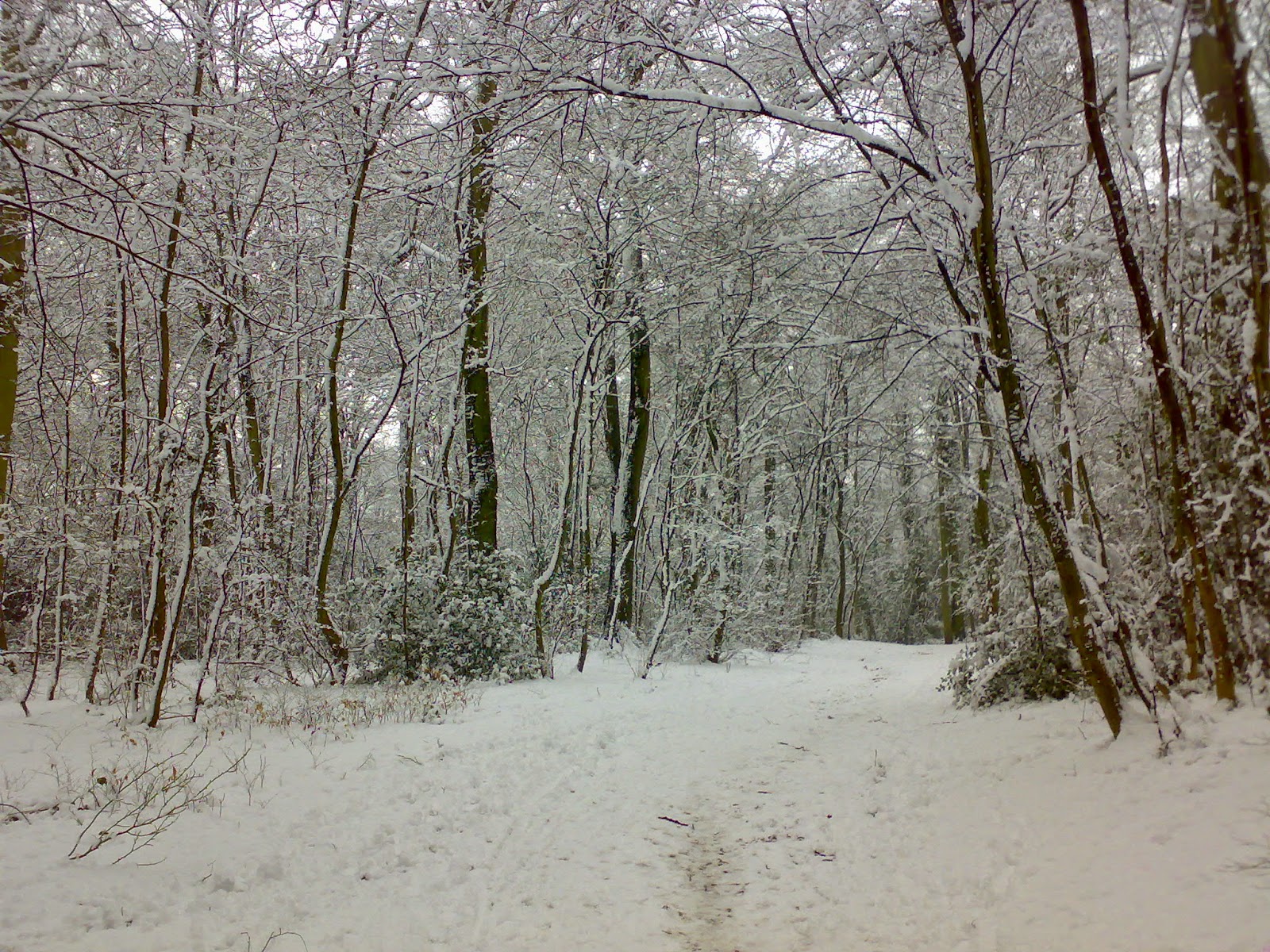
Imagine ... the excesses of Christmas and the New Year are left behind; resolutions are still respected. Taking exercise through your local woodland is exhilarating. It is spring; the trees are producing soft green leaves which, moving gently in the breeze, seem to test the sudden mildness; the promise of new life and regeneration. Small birds are everywhere, heard but not seen, building bowers for their young which are imminent. There are animals at every turn from shy, hidden rodents to busy squirrels in the tree tops. There are larger creatures such as badgers and deer which forage through the new growth of shrubs, brambles, ivy and holly. And at ground level bracken swarms aggressively between huge clumps of green moss which cushion fallen trees and decomposing branches. A wide mixture of fungi spring to life in the most unlikely places.

Parsonage Wood, Wiltshire
Source: The Wild Life Trusts 

Then summer emerges with carpets of bluebells and primroses giving way to large purple thistles, rampant chest high grasses, countless white ox-eye daisies with the gentle lazy floating of new-born insects hovering over the wild flowers. You know this woodland so well. You even walk there during the mild summer nights while the soft breezes gently swirl transporting earthy smells while the quiet night-sounds bring a tranquillity unknown during the hectic daylight hours.

And so the year progresses. Soon you notice the change in the colour and density of the canopy. It is as if there is an unspoken warning of harder times; the browns, reds and golds transform from the green which has run its course and now quietly prepares for discard, for death. But surprisingly, this is not a dismal place, rather one of quiet contemplation, a timeless repetition of the ages. You know this woodland so well ... the dry rustle of brittle leaves seems so natural as you walk within the colder wind under the sharp light of a cloudless autumn sky.

Parsonage Wood, Wiltshire

And then, as Robert Burns said, “November chill blaws loud wi’ angry sugh”; but you expect this. It is only then that you hear strange voices, disembodied howling with groans and screeches which surely could come from no human body. Maybe it is the wind swirling past bare tree trunks, “sughing” through the branches as they toss and tremble in the winter gales like the strings of a musical instrument. Or maybe it is local lads wending their way home having become well insulated against the cold. Or maybe it is something more sinister. But it is difficult to explain the sudden cold spots which hit you as if you had opened the freezer in your warm secure cottage in the village. And your dog comes back to you looking worried and ill-at-ease.

The coldness, the eerie sounds, the unexplained feelings of fear are hard to understand. Are Ghosts afoot? Well, such a place is Parsonage Wood in Wiltshire. If you go there to see and feel for yourself, do not go alone.


You can also read this article, and many others, at the Western Gazette website. Click here to follow me and be the first to know when I publish my next short story, article or book review.

Buy P J Cadavori's Catacombs of the Damned at Winstone’s of Sherborne, Waterstones or Amazon, in paperback and e-book formats. Click on the book covers below to view Catacombs of the Damned at Amazon.

 
Kindle                        Paperback 


Follow P J Cadavori:


Monday, June 23, 2014

The Fakenham (Suffolk) Ghost ... or maybe not?


Just the other day I found a tiny little book no larger than a mobile phone which was printed in 1835. Yet it contained 175 pages of very entertaining poetry, with a strong rural bent. It’s called “Bloomfield’s farmer’s boy, rural tales.” What a gem if you like country themes such as Thomas Hardy and Gordon  Beningfield.  And imagine my surprise when I discovered a poem about “the Fakenham Ghost”, a spirit I had not previously heard about.

The story, interspersed with brilliant evocative lines, goes as follows.

An “ancient dame” in “fearful haste” was going home along a “lonely footpath, still and dark”. She was in a hurry as “her footsteps knew no idle stops” but “echo’d to the darksome copse”. All very well so far ... she clearly was tired and desperate to get home before darkness fell.

But then, “darker it grew, and darker fears came o’er her troubled mind” as a “Short quick step she hears come patting close behind. She turn’d; it stopp’d! ... naught could she see” ... imagine her terror in those lawless times; “terror seiz’d her quaking frame”. Then, suddenly, “through the cheating glooms of night, a Monster stood in view”. 

Her fear was such that “down she knelt, and said her prayers” then rushed onwards towards home. But it didn’t stop there, as when she finally opened the gate “so long it swung that Ghost and all pass’d through”. Just imagine, “Much she feared the grisly ghost would leap upon her back”.

She was so overcome by fear that she “fainted at the door”. Quickly, out of the house came her husband and daughter “much surprised”. They lit a candle whose “gleam pierc’d the night” and “there the little trotting sprite distinctly might be seen”.

                                                        “An ass’s foal had lost its dam
                                                         Within the spacious park;
                                                         And simple as the playful lamb
                                                         Had followed in the dark.
                                                         No goblin he: no imp of sin:
                                                         No crimes had ever known”.

You can imagine how foolish the “ancient dame” must have felt, but it all ended well as

                                                          “They took the shaggy stranger in,
                                                           And rear’d him as their own.

                                                           His little hoofs would rattle round
                                                           Upon the cottage floor.
                                                           The matron learn’d to love the sound
                                                           That frighten’d her before”.

An enchanting story which perhaps sheds some light on the phrase about making an ass of oneself?


You can also read this article, and many others, at the Western Gazette website. Click here to follow me and be the first to know when I publish my next short story, article or book review.

Buy P J Cadavori's Catacombs of the Damned at Winstone’s of Sherborne, Waterstones or Amazon, in paperback and e-book formats. Click on the book covers below to view Catacombs of the Damned at Amazon.

 
Kindle                        Paperback 


Follow P J Cadavori:

Tuesday, May 20, 2014

Can a ghost be in two places at once? ... perhaps


Lady Lisle 

In 1685 a certain Lady Lisle lived at Moyles Court in the New Forest in Hampshire. This was of course the same year that the Monmouth rebellion was crushed (see my blog The Sedgemoor Ghosts) and the whole of the south-west of England was seething with desperate escapees fleeing the retribution of Judge Jeffreys. In those days to be on the losing side was no small matter.

Lady Lisle was soon contacted to provide safe haven for two rebels who were in sore need of sanctuary. Because of her anti-royalist views she took them in. The house was raided the next day and the two fugitives and Lady Lisle were arrested. She was 70 years old and by all accounts a formidable personality.

Lady Lisle was one of the first to be tried at Winchester Castle and was found not guilty of harbouring traitors. However, the power and personality of Judge Jeffreys was such that he over-ruled the decision and she was sentenced to death. There then followed much discussion about the merits of burning at the stake, hang drawing and quartering, and beheading. On one side was Jeffreys who wanted maximum impact through burning, and those sympathisers who wanted a less harsh punishment of beheading due to her age.

The Eclipse Inn, Winchester
Eventually it was decided that she should be beheaded in Winchester Market Place. She spent her last night in the upper rooms of a building which fronted onto the Market Place, and is now the Eclipse Inn. She had a sleepless night while awaiting her fate because the sounds of the scaffold being constructed were impossible to muffle. The next morning she stepped out of a window straight onto the scaffold where, after the normal speeches, sentence was carried out.

So, 350 years later, what of today?

In the Eclipse Inn a Grey Lady has often been seen drifting along the upstairs passage. She is accompanied by surreal sounds of a wooden construction being nailed together ... presumably the scaffold. And at the same time sounds of footsteps with the swish of an expensive, voluminous dress is heard along the corridors of Moyles Court. It is said that both are Lady Lisle.


You can also read this article, and many others, at the Western Gazette website. Click here to follow me and be the first to know when I publish my next short story, article or book review.

Buy P J Cadavori's Catacombs of the Damned at Winstone’s of Sherborne, Waterstones or Amazon, in paperback and e-book formats. Click on the book covers below to view Catacombs of the Damned at Amazon.

 
Kindle                        Paperback 


Follow P J Cadavori:

Related Posts Plugin for WordPress, Blogger...