Showing posts with label Supernatural Dorset. Show all posts

Tuesday, January 5, 2016

The cross roads … steeped in blood


Imagine …

It is a day of execution at a cross roads in medieval Dorset. The gibbet dominates the scene where the four roads meet which connect the local villages. Life is cheap, and for the poor, short. There is a large crowd gathering in a party atmosphere with brightly coloured stalls selling beer, pies and gruesome relics from other executions. These are always fake but in a time of religious fervour the gullible public will buy anything which has even the faintest hint of a promised salvation which such remains were deemed to possess. This even affected the rich and educated.


Red Post sign, A31, Dorset


They are coming from all four directions; sightsee-ers from the various villages who have been discussing this day for several weeks. There is a palpable feeling of excitement. And finally the star of the show is led to the gallows; sometimes even dragged there on a wicker sled. He, or she as in those days many witches were hanged, is then prodded up the ladder, the halter is attached to the sound of prayers being offered by the local priest, then the victim is swung off into space to “dance” until death relieves the suffering. This is accompanied by much shouting and hooting from the onlookers, until a collective indrawing of breath marks the final moment. Then the crowd, after loitering for an hour or so to watch the final gyrations of the body, departs. Because now a new fear replaces the spectacle. It is a well-known fact that on crossroads such as these, unhappy souls who have committed suicide are buried. There is nothing to mark their passing, none to lament their shortened lives but the rumours persist of these spirits returning to haunt those who linger. It was well-known that crossroads such as these were chosen to bury the dead so that the soul of the departed would be too confused to know which road to take to seek retribution from those who had persecuted them in life. To the Church such an action was an ultimate sin so no help or comfort would come from that source.

And then we come to the interesting part of the story. To remind people of where they are, and to encourage strangers to hurry past with averted eyes to avoid seeing evil, the road signs on these crossroads were painted red.

A likely story I hear you scoffing.

But such a red sign still exists on the Bere Regis to Wimborne Minster road, the A31. So for those who are sensitive to such things if you go there on a quiet morning you might just hear a whisper of the crowd, or a harsh grating of the rope against the crossbar of the gibbet as the weight suddenly takes hold and the struggle begins. Or it might be just the soughing of the wind in the trees. But anyway, this is not for the faint hearted. Most of us who have to go that way, hurry past with a prayer for the tragedies of the past.


Follow P J Cadavori:


Thursday, July 31, 2014

Strange adventures in the County of Dorset AD 1747


Strange adventures in the County of Dorset AD 1747
When you stumble upon a book with a title like this, you just have to spend a few pounds to buy it.

It is primarily a story about English South Coast smuggling, ghostly rumours within the cliff-top caves and passages of the local Manor House (ghosts being the best security against snoopers), a wealthy Spanish smuggler for the love intrigue and much mayhem and murder around the Poole Customs House ...

                      “there is said to be a real accredited gang of smugglers about, a tangible witch hard by, a ghost in the house ...”

It is a fast moving tale centred around, amongst other things, the confiscation of illegal tea, the recapture of the tea by the smugglers and eventually, almost a happy ending. It is a story about the infamous Hawkhurst Gang; but everybody was at it “an immense and well-organised illegal traffic was carried on by those deemed the most respectable inhabitants of the district”. Apparently, twenty to thirty wagons of spirit kegs conducted by two to three hundred smugglers were not uncommon in the New Forrest where almost every man was a smuggler or poacher.

The central characters, traveling to the south coast, enter into the spirit of the times by being “much afraid of leaving London, on account of the highwaymen”, and when they finally arrive in their country house immediately sense the ghost “there is something eerie in the room, and I don’t feel happy in it alone.”


The infamous Hawkhurst Gang at Poole Custom House

But what makes this different to other smuggling/ghost stories is that it is written in the diary format of those who were actually there. The quaint and precise 18th Century form of writing with wonderfully evocative descriptions of the countryside are themselves a joy to read and add hugely to the ambiance of the tale ...

                      “the many coloured sand cliffs curved around the bay, topped by a line of purple heather surmounted by fir trees, the line of the cliffs terminating in a distant headland”

It is as if you are actually there, a part of the elegance,
       
                      “after dinner, Eva seated herself at an old fashioned spinet with odd, old tinkling notes, and sang ...”

but yet also a part of the brutality of the age ...
                      
                       “ a bad offender is hung and the body left in chains ...”

And, in addition, there is a large map and illustrations so you can easily follow the action around Swanage, Corfe Castle, the Isle of Wight, Christchurch and Studland amongst many names well recognised by Dorset families. I particularly like some of the descriptions such as cormorants being labelled  as “Isle of Wight parsons”, although I did object to my favourite Blue Vinny cheese being described as a “poor sort of cheese called “Vinny.”

Finally, good luck in finding this book; your efforts will be rewarded.


You can also read this article, and many others, at the Western Gazette website. Click here to follow me and be the first to know when I publish my next short story, article or book review.

Buy P J Cadavori's Catacombs of the Damned at Winstone’s of Sherborne, Waterstones or Amazon, in paperback and e-book formats. Click on the book covers below to view Catacombs of the Damned at Amazon.

 
Kindle                        Paperback 


Follow P J Cadavori:

Monday, October 21, 2013

Is this Dorset’s most diversified haunted house?


Just for starters: a cat, a monkey, two duellists, a barrel maker in the cellars, a Grey Lady, a priest dressed in black – and there are probably lots more, given the age of the house.

The place is Athelhampton Hall, near Dorchester.

Bernard Cornwell wrote a terrific novel called “Death of Kings” which describes the brutal world of England in the tenth century. It ranges over the 100 year period from 839 to the mid 900s where Athelwulf, the king of Wessex sired a whole dynasty whose names started with Athel, Al, Aefth, and finally Athelstan who was probably the first true King of England.  Athelstan had many palaces, one of which is reputed to be the site where Athelhampton Hall was later built in the reign of Edward IV... about 1470. So the Hall’s name beginning with Athel is surely no coincidence.

The ghost stories however start in later times in the Civil War period – see my blog The Sedgemoor Ghosts for a feel of those times.

A guest was staying at the Hall and was disturbed by two duellists who fought until one was stabbed; they both then just disappeared much to the astonishment of the visitor. The Hall’s owners had Royalist sympathies at that time but one can only speculate what the disagreement was about. And sometimes, from the depths of the cellars can be heard the noise of what is believed to be a cooper continually employed in repairing barrels. But these days there are no barrels to be repaired.

There is also a Grey Lady who floats around the house, and rather disconcertingly makes a habit of disappearing through the panelling when challenged.

And then there are the animals… a cat has been heard stalking the boards while an ape which was mistakenly incarcerated in one of the passages can be heard incessantly scratching at the wood panelling to try to get released. Maybe it is trying to get the attention of a Priest, dressed in black who has been seen walking up and down the passages. This might be a Catholic Priest who many great houses had to hide during the religious turmoil of the sixteenth and seventeenth centuries.

What about the ghosts from more ancient times? Given the lengthy history of the house and its land, it is quite reasonable to assume that there might be more spirits waiting to reveal themselves. My recent blog Is this the oldest ghost in Britain? looks at a ghost which is 2600 years old; so there might be many more lurking in the background of Athelhampton Hall.


You can also read this article, and many others, at the Western Gazette website. Click here to follow me and be the first to know when I publish my next short story, article or book review.


If you enjoyed this article you may also like P J Cadavori's sexy supernatural horror novel Catacombs of the Damned


Buy Catacombs of the Damned at Waterstones or Amazon, in paperback and e-book formats:


Follow P J Cadavori:

Thursday, October 3, 2013

A “most unsatisfactory” death which led to exorcism...


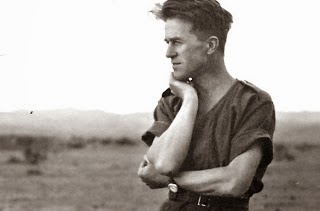
After the first world war one of Britain’s most charismatic soldiers settled into a small cottage about ten miles from Dorchester, in Dorset. Today, if you visit this cottage you will be startled by the austerity of the rooms which demonstrate quite clearly the materially uncomplicated character who lived there.

The year was 1923.

The owner was T.E. Lawrence, better known to the world as Lawrence of Arabia.

About twelve years later Lawrence was discharged from military service and thus had ample time to pursue his passion for speed by driving his motor cycle with, what was reputed to be at the time, complete disregard for safety. This later resulted in his death when he came upon two boys in the road whom he had to swerve around. He lost control and died six days later in hospital.

Since then, the spirit of Lawrence is said to haunt the cottage with numerous sightings of an individual in arab dress entering the house. But those who try to find him there, have found nothing. Although there have been stories of his arab friend having been seen inside the passageways.

There are also numerous stories of the sound of a motorcycle which mysteriously stops just when you expect to see it.

There is still controversy about his death with a phantom car having been seen in the vicinity but which too disappeared. So maybe the two boys had nothing to do with it. Hence the coroner described the death as “most unsatisfactory”.

In 1985, on the fiftieth anniversary of his death an exorcism was carried out at the scene of his accident to help his spirit find rest. This seems to have been successful as there have been no further reports of sounds or sightings.

Lawrence was extraordinary not only in life, but also in death. May he now rest in peace.


You can also read this article, and many others, at the Western Gazette website. Click here to follow me and be the first to know when I publish my next short story, article or book review.


If you enjoyed this article you may also like P J Cadavori's sexy supernatural horror novel Catacombs of the Damned


Buy Catacombs of the Damned at Waterstones or Amazon, in paperback and e-book formats:


Follow P J Cadavori:

Monday, September 2, 2013

Is this the oldest ghost in Britain?

Imagine... 3000 years ago the stone age had given way to the bronze age. Thanks to immigration from Europe the stone age Britons had learnt how to combine tin with copper to make better tools and weapons. Such skills were well known throughout Europe and were readily adopted in Southern England where both commodities were found in abundance.

At the same time, what are now quiet rural backwaters were in those days bustling communities. There were scores of farming households with out-houses to construct pottery, weapons and textiles. There were small burial sites dotting the countryside and the movement of people was common with ceremonial religious practices emerging. My recent blog about Stonehenge gives a few insights into this.

But there were storm clouds elsewhere. Many of the near eastern empires were collapsing and there was constant warfare throughout the mediterranean. So there was mass migration to calmer areas such as Southern England.

Bottlebush Down, Dorset
One such place is in Dorset, south of Salisbury and is now called Bottlebush Down. There was a large community there in about 1000 BC where the warriors had constructed a defensive earthworks called the Cursus. This was about 6 miles long and had 2 parallel ditches about 100 yards apart. It is believed that it housed a garrison to stem the invasions of newcomers from the south and east.

In modern times, this is where a lone horseman has been seen, galloping along the Cursus, to disappear where there is an isolated burial mound. He can be dated because in 1924 an eminent archaeologist Mr R Clay, a bronze age specialist, who was excavating a bronze age site nearby, saw the horseman who rode alongside his car for about 100 yards.
          
                                    “The horse was smallish with a long tail and mane. It had neither bridle nor stirrups. The rider had bare legs, a long flowing cloak and was holding some sort of weapon over his head".”

Mr Clay, with his expert knowledge identified the rider as late bronze age; about 600 BC. And that is not all. The rider has been seen over the centuries by farmers, tourists and passers-by, always at dusk. So this lone horseman, about 2600 years old, is probably our oldest ghost.

But it does beg the question where are all his contemporaries? Perhaps ghosts do, after all, have a finite life and this one is spectacular for his longevity.


You can also read this article, and many others, at the Western Gazette website. Click here to follow me and be the first to know when I publish my next short story, article or book review.


If you enjoyed this article you may also like P J Cadavori's sexy supernatural horror novel Catacombs of the Damned


Buy Catacombs of the Damned at Waterstones or Amazon, in paperback and e-book formats:


Follow P J Cadavori:

Thursday, March 28, 2013

A Short History of Maiden Castle


Last week I took some American visitors to look at Maiden Castle in Dorset. It was certainly not what they were expecting, as there was no sign of any of the traditional mediaeval castles which have captured the imagination over the centuries, and which have been portrayed in countless Hollywood films.
  

Maiden Castle is an iron age hill fort dating from about 300 BC which totally dominates the skyline of that part of the country. It completely overwhelms the person who sees it for the first time. The true extent of the ramparts are only appreciated when you start to walk up the steeply sloping entrance. You pass a truly formidable series of banks and ditches some of which rise 80 feet from the previous trough. And on top of these would have been wooden stockades for further defence. There are up to five ridges and troughs around a two mile perimeter with the land in the centre comprising the living area with huts and storage areas for food, tribal meeting places and animal stockades.

This hill fort was in constant use until slings and arrows proved to be inadequate against the better technology of the Romans whose armaments and ruthless discipline soon prevailed. The fort was sacked in 44 AD by a General who later became the Emperor Vespasian. The fort then fell into decline until the Romans left, and then in about 550 AD it was rumoured to have been brought back into use by the legendary King Arthur.

On a rather morbid note, excavations have revealed bodies dating back to roman times which were seriously mutilated, so the repercussions from withstanding Roman power seemed to have been severe. For those who are interested in the more emotional aspects of defending a hill fort, I portray a suggested scenario in chapter 19 of my book Catacombs of the Damned. Imagination is certainly assisted if you go there on a dark and turbulent winter night. You can feel the fear and desperation of the defenders as they began to understand the forces arrayed against them.


Catacombs of the Damned is available in paperback and on Kindle:


Follow P J Cadovori:


Related Posts Plugin for WordPress, Blogger...