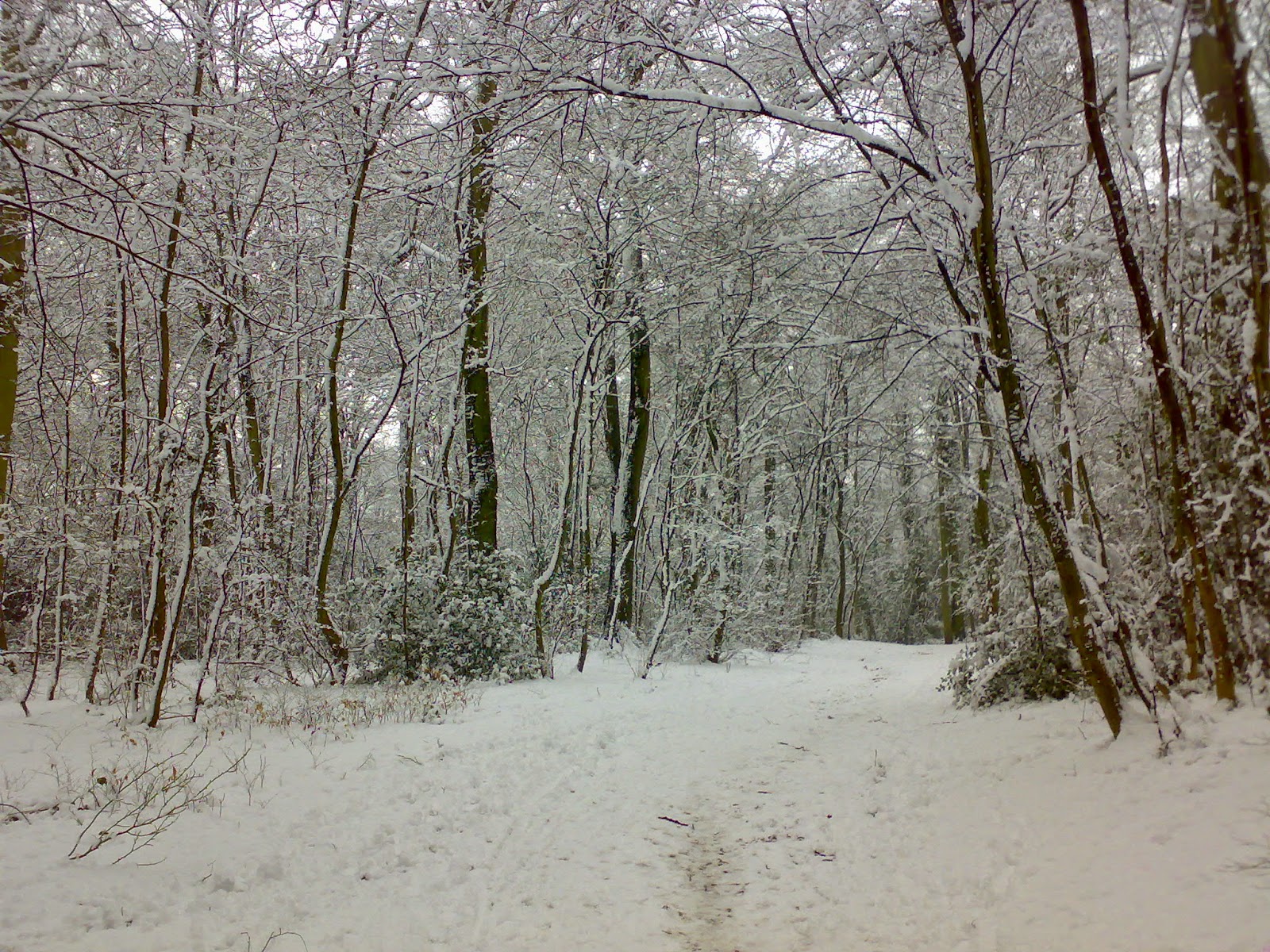
Showing posts with label Short Stories. Show all posts

Wednesday, May 20, 2015

A gentle tale of loss and grief


Bounce, bounce, bounce.

It used to drive me mad. But I get ahead of myself, so let’s start at the beginning. Many years ago in an ancient cottage in a remote part of Devon lived an old couple who for a variety of reasons, remained childless. I used to visit them as often as I could because I was the nearest thing to family that they had.

It was a warm summer evening when I arrived at the cottage after a stressful drive from London. I had been looking forward to a weekend of quiet solitude with my oldest friends, but as I drove towards their home down their pot-holed lane I instantly saw there was a change. All looked as usual, except there was now a front gate and sitting in the porch was a black Labrador. She came barking up to the gate but the noise was tamed by a whirlwind tail so the bedlam became an enthusiastic greeting.

“Where did she come from?” I asked as I set down my case in the hall. My friends, let’s call them Robert and Alice, had a contained air of excitement which I had never seen before. “Poppy arrived about a month ago. She was neglected, hungry and soaking wet as she sat outside the front door. She was really skinny and shivering so how could we not take her in?” How indeed I said to myself, knowing my friends’ generosity of spirit. Robert and Alice were two of the most gentle people you would find anywhere and their lifelong friendship had given them a communication where words often weren’t necessary. They smiled at each other in a way which tore at my heart. My solitary life, to which I had grown accustomed, suddenly seemed so sad and yes, lonely.

Poppy. The name suited her so well as she was energetic but gentle. She showed me her plaything which was a grubby old tennis ball which she was so proud of and which once might have taken pride of place in a long forgotten tournament. “We found it in an old tin trunk in the attic and Poppy takes it everywhere with her”. She dropped it at my feet. Bounce, bounce, bounce. Large brown eyes looked up at me, her head on one side with the message as clear as speech “Throw it for me”. I remember thinking at the time she was perfect for two people who were so comfortable together. She fitted in as if she had always been there.

And so their lives continued in a quiet routine with Poppy filling in for the child they never had. Until, as is the way of things, Alice had a stroke and after a short illness quietly died. Typically, with no fuss or drama. When I heard the news and I was the first to know as I had suspected this would happen, I dropped everything to be with Robert for a week or a month … however long it took to help him come to terms with his loss.

As usual Poppy met me at the gate but she must have known that change had come to her life as her tail was less enthusiastic, her movements slower. And I noticed that she had grown grey around her muzzle and her eyes had that slightly opaque far-off look of old age, a look of quiet acceptance. But she dropped the ball at my feet … some habits were too hard to break. I saw Robert softly approaching and I hugged him which I had never done before. This sort of sentimentality was not what his generation did but yet he seemed to welcome the physical contact.

I remember thinking how he had changed. His face was more lined, he spoke less and more quietly, he walked with a stoop which was unthinkable even a few months ago. And now Poppy went everywhere with him. Bounce, bounce, bounce which kept him occupied as those soft brown eyes could not be denied. And in the evenings she would lie on the sofa with her head in his lap. I remember thinking “thank God for Poppy” as her company made Robert’s loss and grief less severe. So days merged into weeks and finally it was time for me to go. I left with a heavy heart, but it seemed a perfect pairing which saw me off at the front gate.

And so my life in London continued as normal. Until one day, several years later I received a message that  Poppy had died. I immediately left for Devon with real fear as to what I would find.

That evening at dinner we stayed up late while Robert talked about his life and together we  travelled back in time to a more gentle, slower era. I remember thinking how difficult it must be for those whose very isolation had made a strange and threatening new environment out of their world. But what surprised me most was Robert’s lack of that almost suicidal desperation which comes from great loss. He said that Poppy was still with him, but it was one of those things which you don’t challenge.

Then, in the early hours of the morning I woke up to a strange ambience in the house. It was a quiet night with the breeze mildly sighing past the windows. There was a silvery light from the moon which bathed the countryside beneath ribbon-clouds which ambled across the night sky. It all seemed so normal. But then I heard it.

Bounce, bounce, bounce. And overlaid was the soft voice of Robert. It seemed that the world had taken on a structure which I didn’t understand. So, later when it came time to leave it was easier in the knowledge that Robert was perhaps not as alone as I had thought. Before I left he told me that Poppy was still with him and that Alice also was present. Who was I to disbelieve this after what I had heard?

And so once again the years past until I heard that Robert had quietly passed away. His last act of generosity had been to leave me his cottage where they had all been so happy.

But it had changed.

After a few days staying there trying to resurrect memories the feeling of bereft solitude became too much for me. I found myself staying awake, waiting for the Bounce, bounce, bounce which used to drive me mad but now of course never returned. It was as if the three of them, having been reunited, had left together to spend eternity in love and companionship. It made my solitary life now seem so pointless … and alone. So I decided to sell the cottage and hope that those ancient walls would relax in the company of a new family.


I know that Robert, Alice and Poppy would understand.


Follow P J Cadavori:


Thursday, July 10, 2014

Woodland Ghosts ... fact or fiction?


Imagine ... the excesses of Christmas and the New Year are left behind; resolutions are still respected. Taking exercise through your local woodland is exhilarating. It is spring; the trees are producing soft green leaves which, moving gently in the breeze, seem to test the sudden mildness; the promise of new life and regeneration. Small birds are everywhere, heard but not seen, building bowers for their young which are imminent. There are animals at every turn from shy, hidden rodents to busy squirrels in the tree tops. There are larger creatures such as badgers and deer which forage through the new growth of shrubs, brambles, ivy and holly. And at ground level bracken swarms aggressively between huge clumps of green moss which cushion fallen trees and decomposing branches. A wide mixture of fungi spring to life in the most unlikely places.

Parsonage Wood, Wiltshire
Source: The Wild Life Trusts 

Then summer emerges with carpets of bluebells and primroses giving way to large purple thistles, rampant chest high grasses, countless white ox-eye daisies with the gentle lazy floating of new-born insects hovering over the wild flowers. You know this woodland so well. You even walk there during the mild summer nights while the soft breezes gently swirl transporting earthy smells while the quiet night-sounds bring a tranquillity unknown during the hectic daylight hours.

And so the year progresses. Soon you notice the change in the colour and density of the canopy. It is as if there is an unspoken warning of harder times; the browns, reds and golds transform from the green which has run its course and now quietly prepares for discard, for death. But surprisingly, this is not a dismal place, rather one of quiet contemplation, a timeless repetition of the ages. You know this woodland so well ... the dry rustle of brittle leaves seems so natural as you walk within the colder wind under the sharp light of a cloudless autumn sky.

Parsonage Wood, Wiltshire

And then, as Robert Burns said, “November chill blaws loud wi’ angry sugh”; but you expect this. It is only then that you hear strange voices, disembodied howling with groans and screeches which surely could come from no human body. Maybe it is the wind swirling past bare tree trunks, “sughing” through the branches as they toss and tremble in the winter gales like the strings of a musical instrument. Or maybe it is local lads wending their way home having become well insulated against the cold. Or maybe it is something more sinister. But it is difficult to explain the sudden cold spots which hit you as if you had opened the freezer in your warm secure cottage in the village. And your dog comes back to you looking worried and ill-at-ease.

The coldness, the eerie sounds, the unexplained feelings of fear are hard to understand. Are Ghosts afoot? Well, such a place is Parsonage Wood in Wiltshire. If you go there to see and feel for yourself, do not go alone.


You can also read this article, and many others, at the Western Gazette website. Click here to follow me and be the first to know when I publish my next short story, article or book review.

Buy P J Cadavori's Catacombs of the Damned at Winstone’s of Sherborne, Waterstones or Amazon, in paperback and e-book formats. Click on the book covers below to view Catacombs of the Damned at Amazon.

 
Kindle                        Paperback 


Follow P J Cadavori:


Wednesday, June 18, 2014

A ghostly revenge ...


About 200 years ago a merchant ship sank in foul weather off the Kent coast. There were many such incidents in those days, but in this particular case the only survivor was the Captain who, more dead than alive, managed to drag himself over the stinking mudflats and marshland towards lights which he could see, gently twinkling, in the far distance. After what must have seemed to be hours of crawling and struggling through the glutinous mud where every step was an effort, he arrived , thankfully, at the house. With a final push he banged several times on the heavy oak door and then heard an upstairs window being opened.“Begone you villain” he was told with uncompromising harshness. The window slammed shut. The Captain sunk to the ground in dismay. Overcome by exhaustion, he slept.

He never awoke and his body was removed the next day.

Since then his revenge has been remorseless. In what is now a secluded pub, his spirit re-appears with terrifying frequency. If you are sitting at the bar and you suddenly smell tobacco, tar and other nautical odours, and if the wind is whistling and crashing around the building in what must be a repeat of the fatal weather conditions of centuries ago, you might see this apparition.

He brings an aura of silent menace, of pent up anger, to visitors and regulars who are enjoying a quiet drink. He appears, glowers at everyone and then just disappears. But his real revenge is on the staff ... he appears soundlessly when least expected and his looks and chilly presence terrify all whom he surprises. He is even rumoured to have appeared in the bedrooms of the owners and stare malevolently at them before disappearing. The sense of evil and anger has not diminished over the years.

The Shipwright's Arms, Kent 

The place? The Shipwright’s Arms in Hollowshore, Kent. Go and visit for yourself, and you might be (un)lucky enough to meet “Harry”.


You can also read this article, and many others, at the Western Gazette website. Click here to follow me and be the first to know when I publish my next short story, article or book review.

Buy P J Cadavori's Catacombs of the Damned at Winstone’s of Sherborne, Waterstones or Amazon, in paperback and e-book formats. Click on the book covers below to view Catacombs of the Damned at Amazon.

 
Kindle                        Paperback 


Follow P J Cadavori:


Wednesday, May 29, 2013

The Guardians


Have you ever bought an old house? Did you notice the gnarled trees and aged shrubs that were thriving close to its walls?

    No?  

    Then read this.

    There was an old rectory in a remote part of rural Dorset. It was a fine building, very square and solid with large sash windows whose white frames contrasted with the grey colour of the stone. It gave off an aura of permanence as it nestled within the wild growth which hugged the walls. It radiated a feeling of solid strength which lent a timeless support to the transient owners who seemed to change every decade or so. Families came and went with not even the slightest hint of anything unusual. And as long-serving as the house itself, was the family of old Eric, the retired herdsman who had been employed to look after the grounds for as long as anyone in the village could remember, as had his father before him, and his father before him. It was a connection that stretched back into a hazy past and which it was rumoured went back to a celtic, pagan antiquity.

    One day, late in the year 1995 the Atkins family from London arrived as the new owners. Mark had been a successful commodity trader in the City and having made a great deal of money early in his life had decided to retire at the age of 45. He appeared one cold November day with his wife and two girls and was still young enough to want to change his environment; to “improve” whatever he saw.

     “I hear we have an old gardener…I bet he’s so old he won’t want to change anything. I mean just look at all this jungle” he grumbled to Susan, his long suffering wife of twenty years. She shrugged her shoulders as experience had taught her to give way on the small things so that she could win the important disagreements which she knew were sure to come… friends for the girls, schools to choose; the potential battle field stretched before her.

     “I will send for him and tell him what we want” Mark said.

     Susan looked sharply at him. ”We?” She thought to herself, but mentally dismissed the irritation. Susan liked to drift and actually quite enjoyed the general feeling of tumbled-down anarchy which was the garden, but which clearly annoyed Mark. It was as if it were a challenge to his sense of order. She thought surely this couldn’t be important enough to make a stand on.

       It was a raw windy morning when Eric arrived. He could understand how a man from the suburbs of a large city would be repelled by the soggy transition to winter with piles of leaves and plants, lawns and flower beds displaying an autumnal look of unkempt decay.

     “I don’t care about that” Mark pointed out. “I just want to get rid of anything within 30 yards of the house. I need a swimming pool here” he gestured towards some straggly bushes “and maybe a tennis court over there” as he waved his hand at a grove of alder trees.

      Eric froze. “You can’t do that.” He spoke in a very gentle west-country burr while looking at Mark with surprisingly blue eyes. “You must leave these. That is a bay tree. No witch will come near and lightning will strike away from the bay”. He pointed out a large bush about ten feet tall with a tangle of branches which should perhaps be clipped. “And you see that laurel hedge? That will protect against lightning”. Eric talked quietly through the various bushes and plants. There was an unusual oak which had been topped to make it bush, next to it was a massive yew with an old rowan tree gently mingling their branches as if to gather strength from each other. “These are The Guardians; they will protect you” Eric said casting his eyes around the garden with a look of deep and ageless wisdom. And then he spoke quietly about the smaller plants which were spreading over the gravel path that snaked around the house. Patches of clover which pre-dated Christianity; bracken which was running in all directions, and... Mark interrupted him, boredom clearly showing as his original view about Eric was vindicated.

     Mark duly built his swimming pool while the house forlornly took on a naked look. All the trees, plants and anything natural was removed. This ancient elegance had become a depressing building site of mud which was cratered with holes and scars as if the face of a particularly gentle friend had been ravished by the smallpox. Now the house stood alone, in a modern suburban purity.

     “No good will come of this” Eric told his friends of an evening in The Antelope. “This winter will be a hard one; I’ve never seen so many berries in the hedge-rows”. He was right of course. The winter of that year was particularly bad and rampaged through the village within days of the garden’s destruction. The first of the storms tore in from the Atlantic during the night, and bitterly cold  winds drove across the land from the surging wastes of the oceans. The now unprotected house however stood firm even though there were no trees to shield against the wind. The storms produced thunder and lightning of extraordinary energy. The old building groaned and creaked as such houses do. The Atkins family found that the intensity of the violence, the drumming rain, the crashes of thunder with bayonets of lightning darting to earth was truly frightening.

      Nobody in the village knew what happened next. That stormy night the skyline was suddenly lit up by a massive fire which brought a hellish glow to the area. By the time the firetruck had travelled the twenty miles to get there, it was too late. The blaze was so intense as to be out of control. Days later the fine old house was just a heap of ashes, with a charred structure pointing to the sky as if it were a supplicant from a medieval hell.

      No bodies were ever found.

      Eventually, as is the nature of such things, the ground was cleared and a fine looking “Executive Residence” was built. But what is so extraordinary is that there have been several owners, none of whom would stay for more than a few months. They all complained of strange feelings, sudden chills in the atmosphere, even adolescent screams punctuating the stillness of the night. So the house is now, once again, empty.

However Eric is still there talking of the past and of mysteries which have been lost to modern man. But Eric has no son so maybe the pagan link which allowed him to see the future, and which he alone seemed to understand, will one day be broken. Then, there will be no warning.

_


You can also read this short story at the Western Gazette website. Click here to follow me and be the first to know when I publish my next article, short story or book review. 
_

Follow P J Cadavori:


Related Posts Plugin for WordPress, Blogger...